
English| EUR
Suggested for you
More currencies
Choose a language
The beach walk to Cape Kidnappers provides independent access to one of the world's most accessible mainland gannet colonies. The 8-kilometre return route along Clifton Beach is tide-dependent, requiring precise timing and awareness of coastal hazards.
Quick answer
The Cape Kidnappers gannet walk is a free, self-guided 8-kilometre return beach trail accessible only during low tide windows, typically within three hours either side of low tide. The journey takes approximately four hours return and requires monitoring tide schedules published by the Department of Conservation, as incoming tides can cut off beach access and create dangerous conditions. Walkers must plan departure to ensure safe return before the tide rises.
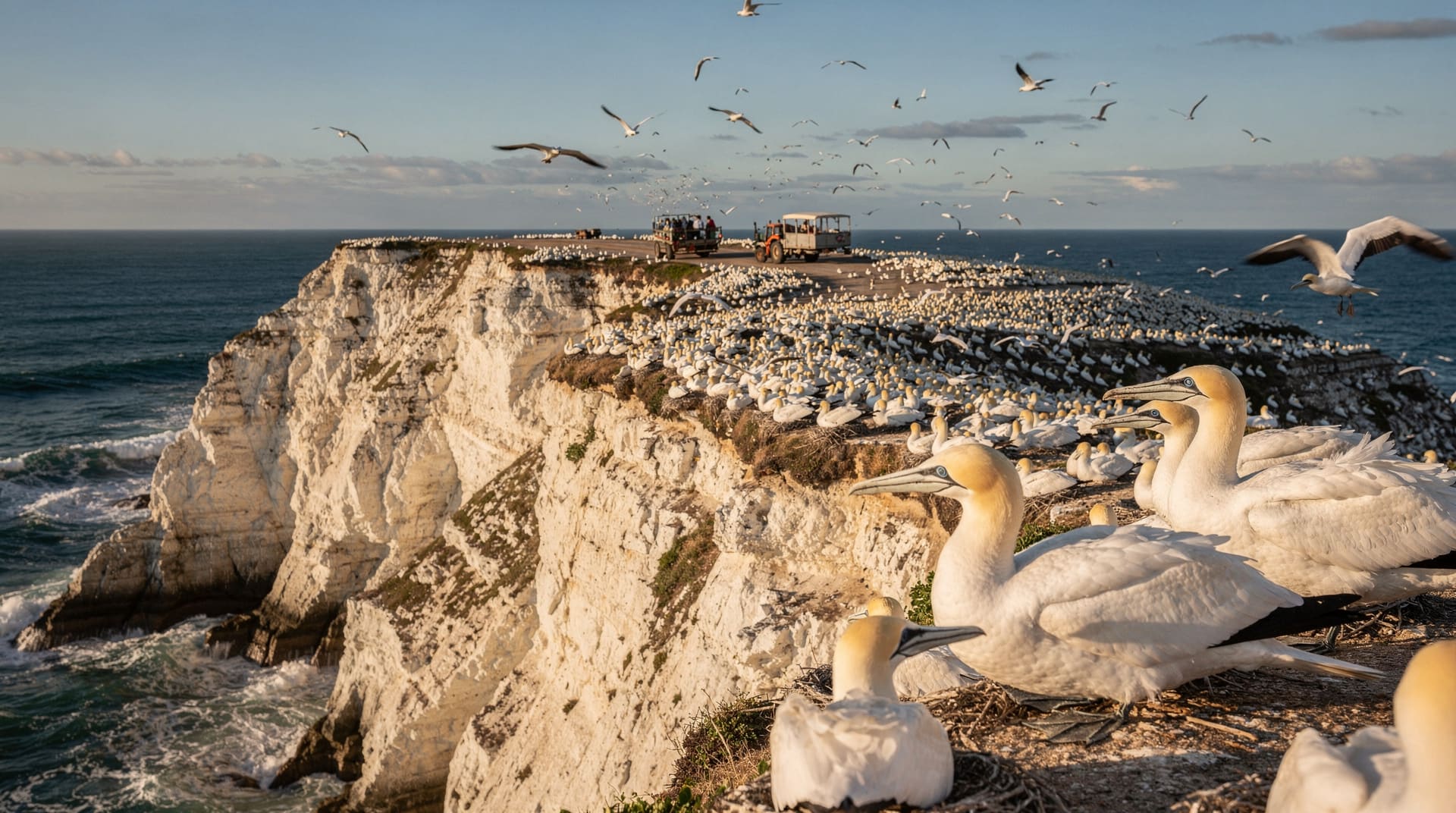
The gannet colony at Cape Kidnappers sits 100 metres above sea level on exposed sandstone cliffs, hosting more than 6,500 breeding pairs between October and April each year. Access on foot follows the coastline from Clifton village, where the beach narrows beneath unstable bluffs that have claimed sections of the original clifftop track. The beach walk to the gannet plateau demands tide awareness above all else. Incoming water eliminates the walking corridor at multiple points along the route, particularly near Black Reef and the final headland approach. Walkers caught by rising tide face no retreat options and must wait hours against the cliffs. The Department of Conservation publishes daily tide windows on its Cape Kidnappers page, and local conditions can shift these windows by 20 to 30 minutes depending on wind direction and swell. The trail surface alternates between compact sand and cobbled sections, with three stream crossings and extended stretches beneath eroding bluffs. The final kilometre climbs a steep vehicle track to the plateau viewing areas, where Australasian gannets nest within metres of the path during breeding season. Walkers should allow four hours for the return journey, starting no later than three hours before high tide to guarantee safe exit from the beach section. The gannet breeding cycle peaks between November and February, when adults actively tend chicks and perform aerial displays above the nesting platforms. Outside this window, the colony remains visible but population numbers drop as birds disperse to offshore feeding grounds. The beach walk operates year-round, though winter conditions bring stronger swells that narrow the safe tide window and increase rock-fall risk beneath the bluffs.
“The incoming tide eliminates all retreat options at multiple pinch points, making accurate timing the single non-negotiable safety requirement.”
The best arrival window is 07:00–17:00, strictly coordinated with low tide to ensure safe passage along the beach. High tide renders the trail hazardous, making tide charts a mandatory planning tool for all hikers.
Warm, 20°C–25°C; gannets nesting
Gannets are most active during these months. Check tides daily.
Mild, 15°C–20°C
Weather is stable for walking. Access remains tide-dependent.
Cooler, 12°C–18°C
Gannets begin returning to the colony. Trail access varies by tide.
Verdict: Plan your hike for a weekday during the spring or autumn months, arriving within the 07:00–17:00 window during low tide.
The Cape Kidnappers beach walk is accessible daily throughout the week. Visitors may access the trail at any time, though progress is strictly governed by local tide conditions.
The Cape Kidnappers Gannet Walk trailhead is located at the end of Clifton Road in Clifton. Visitors arriving by vehicle should head toward the coast of Hastings to reach the designated starting point at the beach.
Clifton Road to Clifton, Hastings 4180
NAPIER to CLIFTON (Limited service)
Clifton beach access point
Park your vehicle at the public parking area near the Clifton road end. Ensure your arrival window aligns with the low tide cycle to safely access and navigate the beach trail.
Access to the Cape Kidnappers beach walk is provided at no cost. Please note that this applies only to independent walkers, as commercial tours charge separate fees for their services.
Verdict: An independent visitor pays 0 NZD for beach access, though commercial tour options are available at varying rates.
The beach route requires careful preparation due to tide conditions and remote terrain.
Everything you need to know about cape kidnappers gannet walk
There is no entrance fee for the self-guided beach hike; commercial tours are charged separately for their transport services.
The round trip typically takes about 5 hours to complete, depending on your pace and time spent at the colony.
The best time for this New Zealand landmarks excursion is between early November and late February when weather is favourable and gannet chicks are present.
Access is strictly tide-dependent; you should leave Clifton no sooner than 3 hours after high tide and depart the cape no later than 1 hour and 30 minutes after low tide.
While the coastal path is relatively flat, it is a significant 19km return distance that requires good fitness and constant supervision near steep cliffs.
No dogs are permitted on this conservation land to protect local wildlife and ensure safety along the trail.
The beach is subject to significant landslides and rockfall, and high tides or large seas can completely block access, creating a hazardous environment for hikers.